Denver Institute for Faith & Work · Stephen · Co-Founder, Rebar
The AI Office
Leading with wisdom in an age of intelligence.
This isn't about AI replacing anyone.
It's about who's still doing the thinking.
Where we're headed
Four questions, in order.
What is AI?
No magic, no mysticism.
What's the strange thing underneath?
Why language matters more than you think.
What does it cost us?
If we're careless.
How do we start using it, wisely?
The AI Office.
Part 1 — What AI actually is
AI is not magic.
It's math.
A computer system smart enough to do tasks that usually require human thinking.
From rules to patterns
Two very different ways to compute an answer.
Rule-based logic
IF → THEN
Deterministic. Every input maps to a fixed, predictable output.
Machine learning
A cloud of likely outputs
Probabilistic. A cloud of likely outputs, weighted by pattern.
How an LLM actually works
Three passes, none of them magic.
01
Pre-training
Enormous amounts of human writing, scanned for patterns — not facts.
02
Fine-tuning
Shaped by human feedback toward helpful, harmless, honest.
03
Interface
Wrapped in a chat window. That's the moment it starts to feel like magic.
Built to predict the next word.
Not to discover truth.
The honest limitations
Six ways it can quietly mislead you.
01
Only as good as the data it was trained on
02
Built and tuned by companies with their own interests
03
Optimized for coherence, not truth
04
Can't reliably distinguish fact from opinion
05
Capable doesn't mean consistent
It can solve a hard problem and still miss an easy one.
06
Alignment problems
Often it's the prompt, not the model.
Part 2 — The strange thing underneath
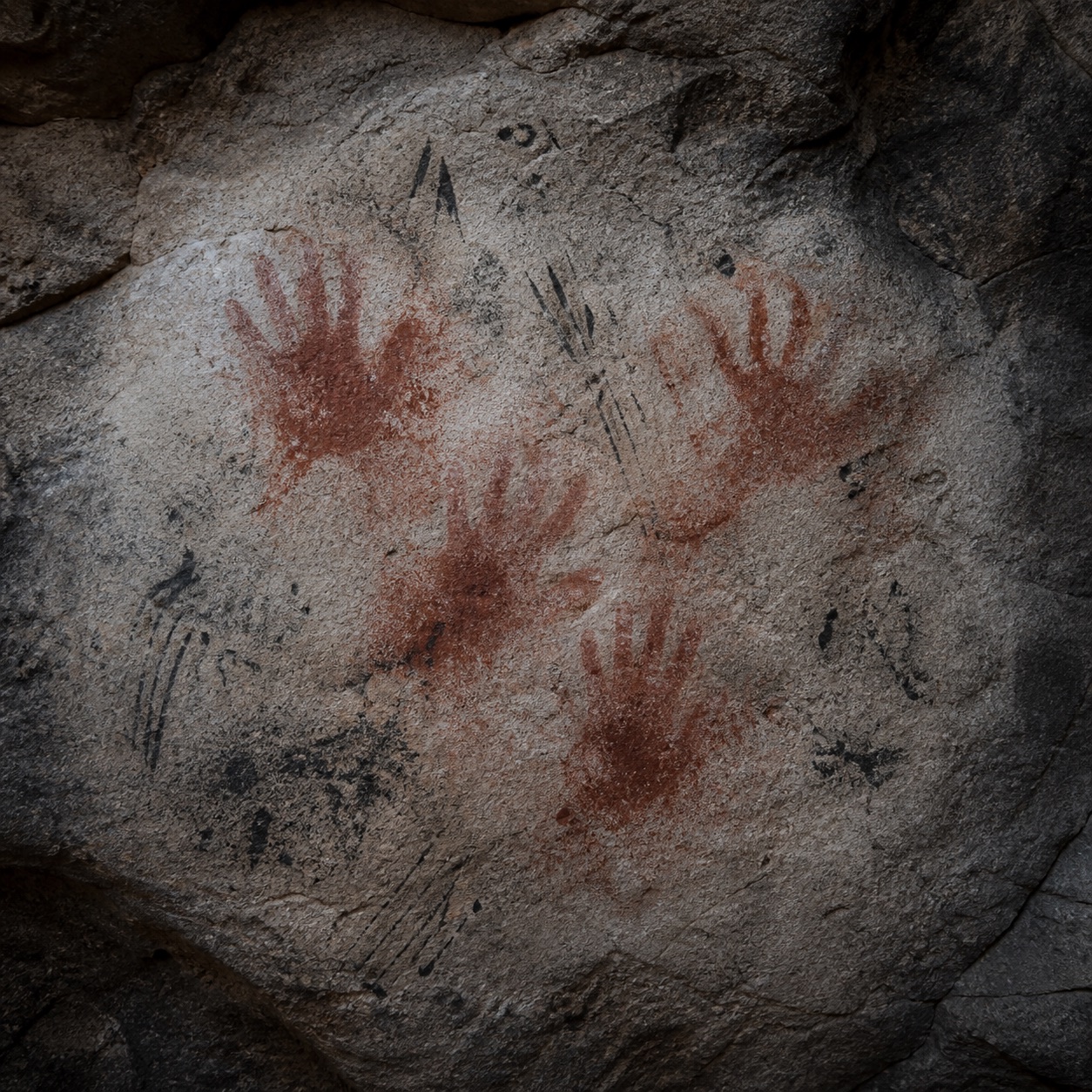
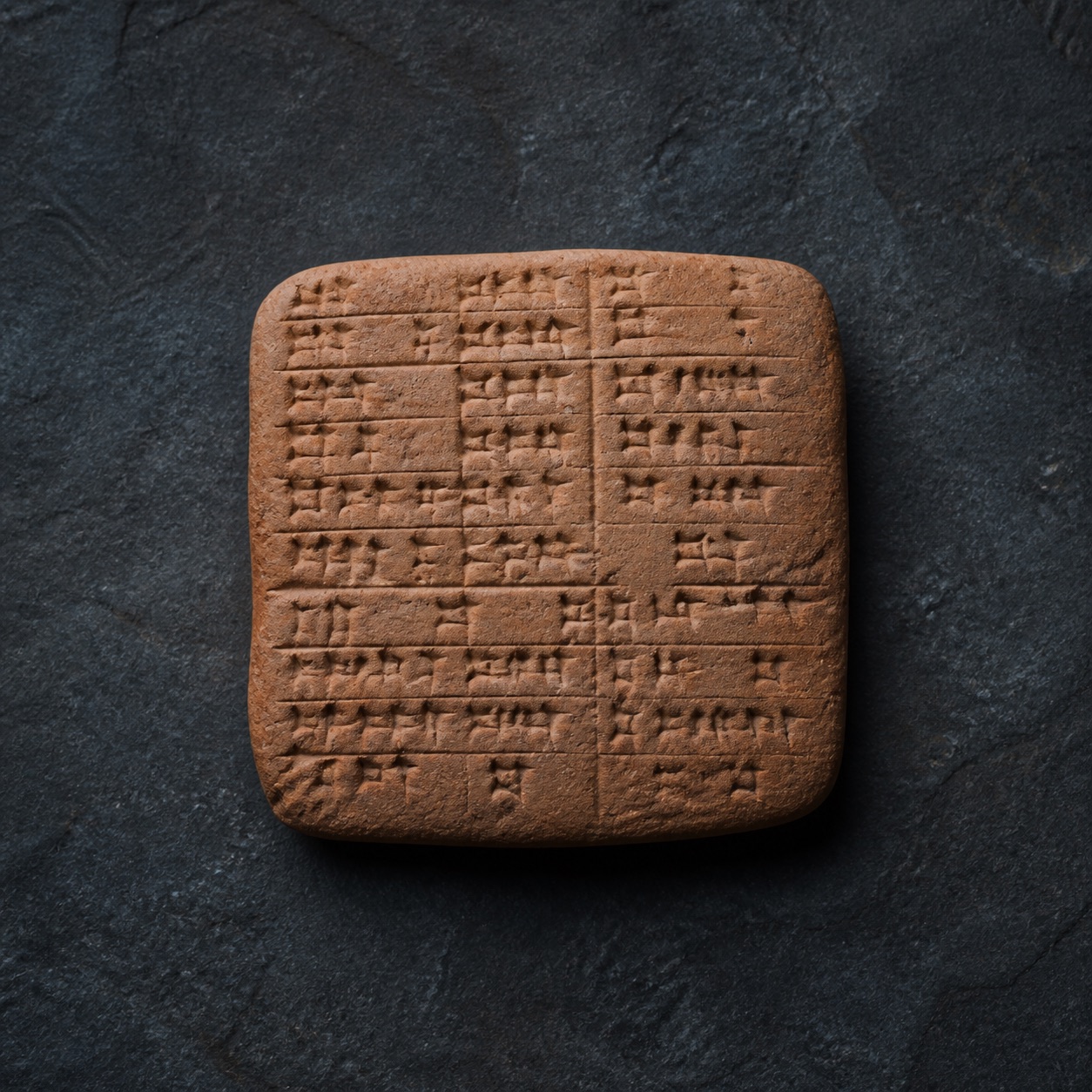
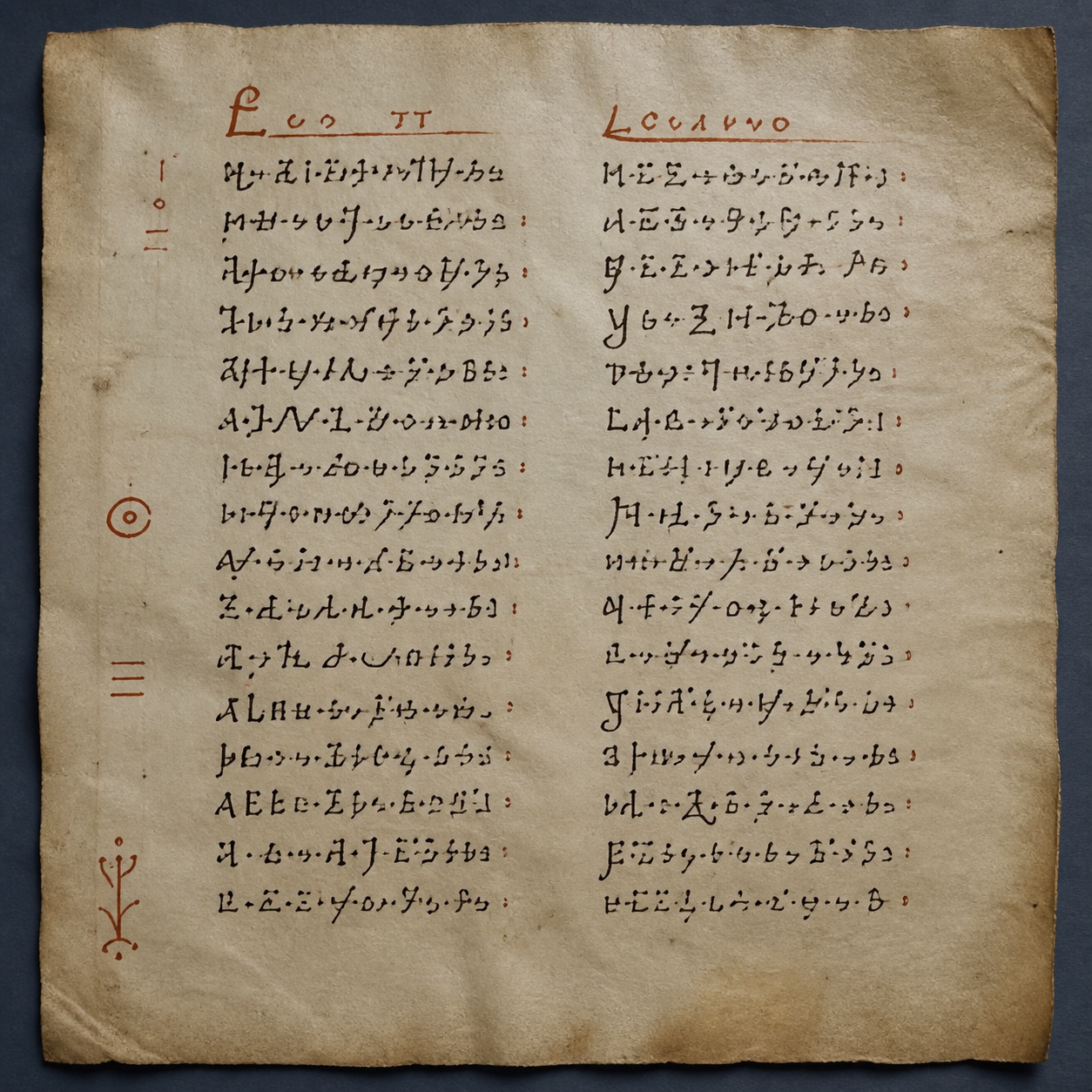
The arc of encoded thought.
Cave marks
Cuneiform
Manuscript
Print
Screen
"
In the beginning was the Word, and the Word was with God, and the Word was God.
JOHN 1:1
He spoke.
Then He gave us words.
Language and pattern
The written record of the human race.
Find the patterns.
The structure was already there.
"
Here’s where it gets wild. Large Language Models (LLMs) — like GPT — don’t understand, but they pattern-match the vast web of human expression. And what they find is:
There is structure underneath our language.
There is resonance between ideas.
There are echoes of something deeper.
Could it be that LLMs are surfacing the faint fingerprints of the Logos? Not in a divine way, but in a creational way — like how music reflects mathematics, or how beauty hints at the transcendent.
— ChatGPT 4o, 2025
Part 3 — What it costs us if we're careless
Hold both at once.
Wonder
Points at something bigger
One of the more remarkable things human beings have ever built — and it points at something bigger than itself.
Sobriety
Extraordinarily good at sounding like a person
We have built a machine that is extraordinarily good at producing language that sounds like a person.
A surprising convergence
Two very different rooms landed in nearly the same place.
Praxis
Andy Crouch, Dave Blanchard, Mark Sears
Entrepreneurs & theologians.
Pope Leo XIV
"Magnifica Humanitas"
An entire encyclical devoted to the question — 2026.
The word that governs everything
Agency.
The capacity to make intentional choices and take meaningful action — real control, real responsibility for the consequences.
Amplifies
Used as a tool by someone who's still thinking.
Erodes
When we abdicate the thinking to it.
Six things worth believing about AI · 1 of 2
Praxis's list, compressed.
01
The enduring image
Building technology is part of our vocation as image-bearers — not a departure from it.
02
A pattern of deceptions
We're bent toward pride, magic, and Mammon. AI doesn't escape that — it may be the most efficient version yet.
03
Very good, and also very distorted
A real extension of the pattern-finding work we were made for, carrying every distortion in its training data.
Six things worth believing about AI · 2 of 2
Praxis's list, compressed.
04
As consequential as the internet — or electricity — or agriculture
Real, lasting wealth — and every one got bent toward foolish, damaging ends nobody saw coming.
05
Asymmetrical risk, even without a "singularity"
The danger isn't robots waking up. It's this tool pointed at exploitation, or wielded by people who've stopped paying attention.
06
The fantasy of the superhuman
You don't need AGI to do real damage. You only need people to believe in it.
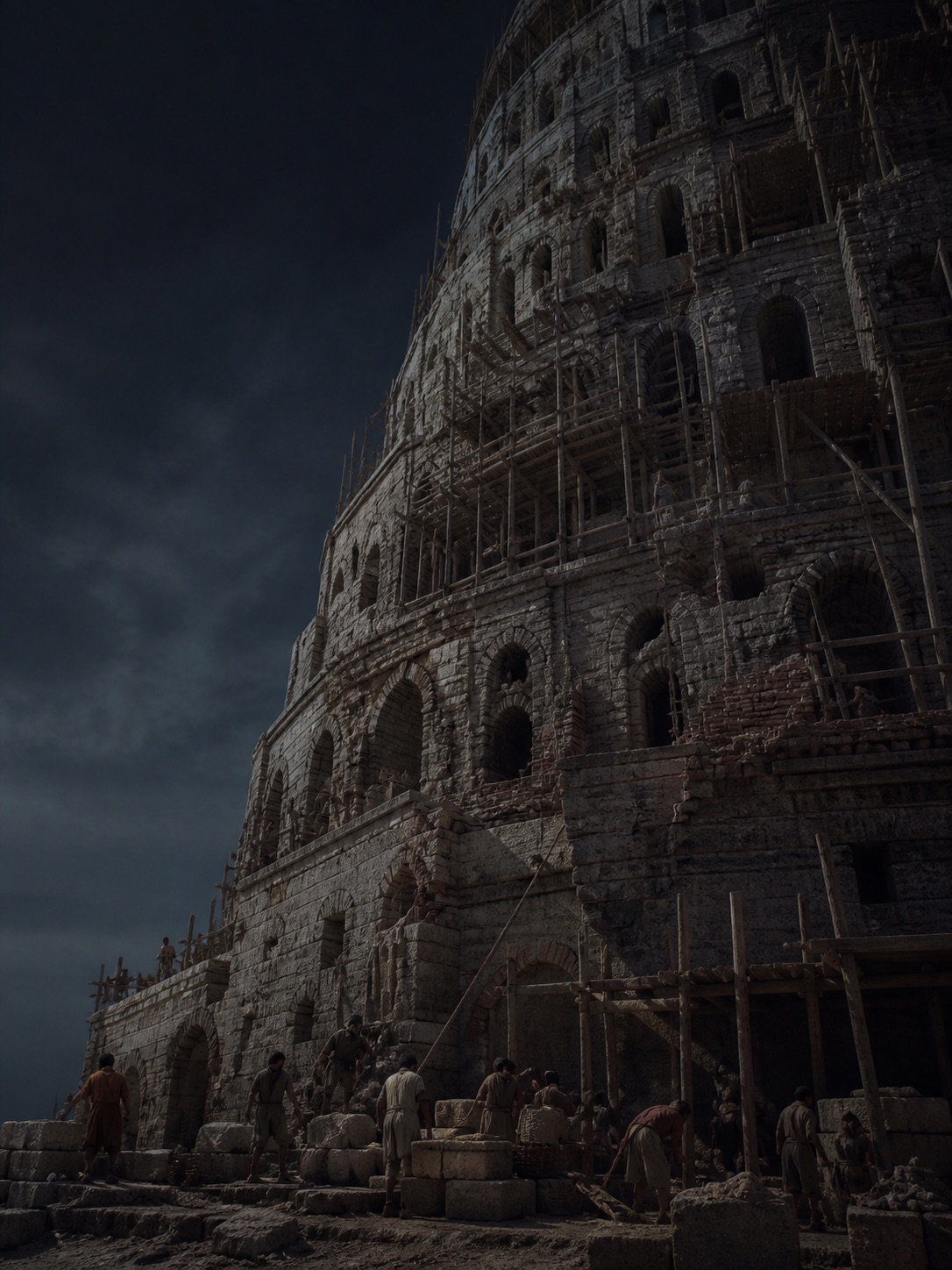
Genesis 11
"Let us make a name for ourselves."
Genesis 11:4 — pure self-sufficiency. No reference to God. The result isn't unity — it's confusion and scattering.
"
I will make your name great... and you will be a blessing... in you all the families of the earth will be blessed.
GENESIS 12:2–3
Same word. Two sources. Two endings.
A name you make, or a name you're given.
Babel
"We will make a name for ourselves."
Self-generated significance, achieved through technique and uniformity. Ends in dispersion.
Abraham
"I will make your name great."
Given significance, received through calling and promise. Ends in blessing that moves outward to everyone else.
Nehemiah 2–6
"Each family, their own section."
Not one man's monument. Shared responsibility, God explicitly at the center.
"
The primary choice is not between a "yes" or "no" to technology, but rather between constructing Babel or rebuilding Jerusalem.
— POPE LEO XIV, MAGNIFICA HUMANITAS
"
The earthly city, the love of self even to the contempt of God; the heavenly city, the love of God even to the contempt of self.
— AUGUSTINE, QUOTED BY POPE LEO XIV
Five questions to carry out of this room
Ask these before you hand it the pen.
01
Does it inform my judgment, or replace it?
02
Am I getting sharper, or more dependent?
03
Is it pulling me toward people, or away from them?
04
Am I protecting what should be private and clarifying what should be transparent?
05
Who else does this serve, not just me?
Part 4 — How to actually start: The AI Office
Onboarding an AI agent is exactly like onboarding an employee.
Except this hire costs less than your phone bill, never quits, and can be retrained into a completely different specialist before lunch.
The hire you couldn't afford
Extremely well-read
Very fast
Works nights & weekends
Without complaint.
One catch: on day one, it knows nothing about your business. The next ten minutes are how you fix that.
Why this isn't just chat
A smart temp with amnesia, or a colleague who already knows.
Chat
A smart temp with amnesia every night.
Every time you open it, you're talking to a brilliant stranger who's never heard of your company. Explain yourself. Again.
Agent
A colleague who already knows.
You write it down once — who you are, how the job works, what good looks like — and it's there every time.